Traveling Internationally With a Dog
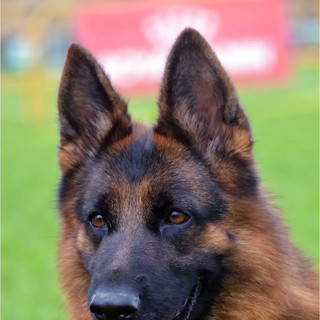

Practical tips, hard-earned lessons, and what actually matters
Traveling internationally with a dog isn’t glamorous. It’s not spontaneous. And it’s definitely not something to figure out on the fly.
It’s a process built on preparation, advocacy, and thinking several steps ahead—because once you’re at the airport with a dog and a crate, your margin for error disappears fast.
This guide isn’t theoretical. These are the things that matter in real life.
Start early: go to the airport the day before
One of the smartest things you can do is physically go to the airport the day before your flight with all of your paperwork.
Ask to speak with the airline’s live animal or cargo desk and have them review:
International health certificate
Import permits (if applicable)
Vaccination records
Any airline-specific forms
This does two things:
Confirms nothing is missing
Gives you time to fix problems before flight day
Paperwork interpretation can vary by airline, destination, and even by staff. A pre-check removes uncertainty.
Know exactly where you’re checking in
Not all dogs check in at the same place.
Before flight day, confirm:
Are you flying your dog cargo?
As a service dog in the main cabin?
As a pet in cabin or checked live animal?
Each option can mean a different building, counter, or terminal—sometimes even off-site from the main airport.
Do not assume signage will help you. Do not assume staff at passenger check-in will know.
Know:
The exact location
Which entrance to use
How early you must arrive
Wandering an airport with a dog and a heavy crate wastes time and adds unnecessary stress.
Understand how the crate is evaluated
Even “airline-approved” crates can be rejected.
Ask the airline in advance:
How they assess crate size
Whether the dog must fully stand, turn, and lie extended
How height is measured
How door fasteners and bolts are checked
Every airline evaluates crates slightly differently. Knowing their criteria ahead of time lets you adjust before you’re under pressure.
Bring zip ties—extras
Zip ties are essential.
Most airlines require zip ties on the crate door, often at all four corners. If the crate is opened for inspection, zip ties may be cut.
Bring more than you think you’ll need and keep them in your carry-on so you can immediately re-secure the crate if needed.
Label the crate clearly and redundantly
Labeling matters. Print out extra labels just in case.
Your crate should have:
LIVE ANIMAL labels on all three sides including the top of the crate
Upright arrows on the sides
Several identification labels with:
Dog’s name
Your full name
Address
Phone number
Email
Flight Information, especially the final destination
Handlers rotate. Clear labeling reduces mistakes.
Create a document pocket on the crate
This is critical.
Place a copy of the international health certificate in a zip-lock bag
Tape it securely to the crate
Use extra tape to seal all edges and create a firm “pocket”
This allows airline staff or inspectors to access paperwork without opening the crate.
Keep originals on you. The crate only needs copies.
Nothing goes in the crate
This is non-negotiable.
No:
Toys
Blankets
Bedding
Collars
Leashes
Comfort items
Anything inside the crate can shift, tangle, be chewed, or become a hazard during handling or turbulence.
A clean, empty crate is the safest crate.
Food and water dishes: advocate for safety
Many airlines require attached food and water dishes. However, dishes can:
Break loose
Be chewed
Become a choking or injury hazard
When I explained this clearly as a safety concern, the airline allowed my dog to fly without dishes attached.
You’re not refusing policy—you’re advocating for safety. Be calm, clear, and respectful, and address this before flight day.
Have an airport cart strategy
Heavy crates change everything.
Before you arrive, know:
How you’ll move the crate
How you’ll walk the dog at the same time
Whether you need a second person
Whether multiple luggage carts are required
Do not assume you’ll “figure it out.” Plan the logistics like a move.
Be careful with training equipment
Training tools that are common in the U.S. may be restricted, regulated, or culturally unacceptable in other countries. Laws—and enforcement—vary widely, and what’s normal at home can quickly become a problem abroad.
When I traveled to Europe, I intentionally left my e-collar and prong collar at home. Depending on the country, e-collars may be illegal to use or even possess, prong collars may be restricted or strongly frowned upon, and customs can confiscate equipment. In some cases, you could also face fines or travel complications. Even if enforcement seems inconsistent, it’s not worth the risk.
International travel is not the time to rely on tools that could create legal issues, draw unwanted attention, or complicate customs clearance. Travel with the minimum necessary: flat collars, simple harnesses, and compliant leashes that align with local norms. You can always reintroduce preferred tools once you’re home.
Pack for delays, not best-case scenarios
Flights get delayed. Connections get missed.
Always pack:
Extra dog food in case of delays or cancellations
Two bowls (one for food, one for water)
Don't try new treats the days leading up to the flight or the day of.
Once you land and exit the airport, your dog will need food and water immediately. These should be accessible—not buried in checked luggage.
Have a post-flight car + crate plan
International travel doesn’t end when you land.
Depending on the country and rental car size, your crate may not fit in the trunk. When I traveled from the USA to the Netherlands/Germany, I had to fully disassemble the crate to load it.
Be prepared to:
Break down the crate
Reassemble later
Bring a bed sheet and lay it in the trunk to reduce dog hair. Rental car cleaning fees for pet hair can be significant.
Final thoughts
Traveling internationally with a dog isn’t about comfort—it’s about control and risk reduction.
Preparation means:
No scrambling
No guessing
No last-minute compromises
When you plan for the details—the crate, the paperwork, the logistics, the contingencies—you give your dog the safest possible experience.
Your dog doesn’t need perfection. They need you prepared.


Comments